
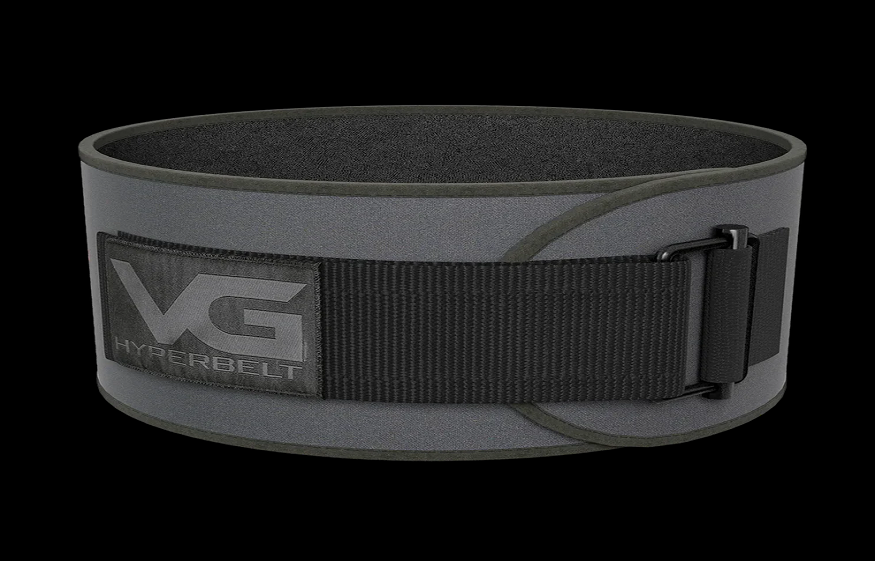
Optimizing Hypertrophy: How the Hyperbelt Transforms Support and Movement Efficiency
The right weightlifting belt removes your lower back as a limiting factor, unlocking greater training volume and faster muscle growth. Traditional thick leather powerlifting belts are designed exclusively for low-rep, maximal-effort lifting, requiring you to take them off immediately after a set. This heavy construction interferes with your natural breathing rhythms and limits mobility during high-repetition training. The design of the Versa Gripps Hyperbelt provides an innovative solution by offering continuous core stability that adapts to your entire workout routine.
Maximizing Intra-Abdominal Pressure Without Restricting Mobility
A performance belt works by giving your abdominal muscles a secure, structural frame to brace against during heavy movements. Taking a deep belly breath and pressing outward against this perimeter increases intra-abdominal pressure, which stabilizes the spine from the inside out. This internal reinforcement prevents your spinal erectors from fatiguing before the target muscles, such as your quads or hamstrings, reach true failure.
The unique architecture of this modern belt provides 360-degree circumferential support, distributing force evenly from your hips up to your rib cage. Traditional rigid gear often concentrates pressure on a few isolated vertebrae, causing pinching or restricted movement during deep positions like the bottom of a squat. By maintaining a uniform 5mm thickness and a 6-inch profile across your midsection, it provides optimal stiffness while allowing your torso to move naturally through full ranges of motion.
Engineered Comfort for Sustained Training Volume
Hypertrophy training demands multiple sets, extended time under load, and short rest intervals that make heavy, bulky gear highly impractical. Wearing a restrictive leather strap across an entire training block leads to bruising, skin pinching, and unnecessary mental fatigue. The specialized multi-layered material blend of this system eliminates the bulk of traditional gear while retaining structural integrity under load.
Read More: How A Headache Chiropractor In Omaha Can Help You Find Lasting Relief
A soft inner lining allows you to wear the support piece directly against your skin or workout clothing without discomfort. Because it utilizes a tapered profile, the edges fit the natural curves of different body types, ensuring the belt does not dig into your hips during lunges or press against your ribs during overhead movements. This ergonomic integration means you can focus entirely on mind-muscle connection rather than physical irritation.
Seamless Versatility Across Your Entire Workout
Transitioning between heavy compound lifts and lighter accessory movements usually requires resetting or completely removing your training accessories. This constant adjustment breaks your mental focus and disrupts your workout flow between exercises. An adaptive tightening system solves this problem by utilizing a premium hook-and-loop closure combined with a secure buckle framework.
This configuration gives you infinite micro-adjustability, allowing you to cinch the frame down tightly for a heavy set of deadlifts and instantly loosen it for breathability during dumbbell rows. You never have to take the belt off during your session, moving from warmups to your final cooldown seamlessly. The lightweight construction allows you to roll it up tightly, saving space in your gym bag.
Read More: How Oncology Patient Support Programs Improve Treatment Experiences
Implementation Strategies for Peak Performance
Integrating structured core support into your daily training regimen requires understanding when to utilize maximum compression versus a relaxed fit.
- Heavy Compound Sets: Position the belt just above the hips, pull the adaptive fastener snug, and brace forcefully to maximize spinal safety.
- High-Volume Accessory Work: Back the tension off slightly to allow for expanded lung capacity while retaining base level lower back reinforcement.
- Machine and Isolation Movements: Keep the belt on a loose setting to preserve body heat and maintain core readiness without compressing your internal organs.
Conclusion
The Hyperbelt bridges the gap between rigid powerlifting gear and soft, unsupportive alternatives to deliver a balanced training tool for modern athletes. Securing your core with an adaptive, full-coverage frame protects your lower back while allowing you to push your training volume to new limits. Investing in specialized training gear optimizes your movement mechanics and ensures you get the most out of every single repetition. Upgrade your lifting toolkit to experience the ideal combination of comfort, stability, and unrestricted performance.